
SAB ALI'S GROWTH ASSISTANT
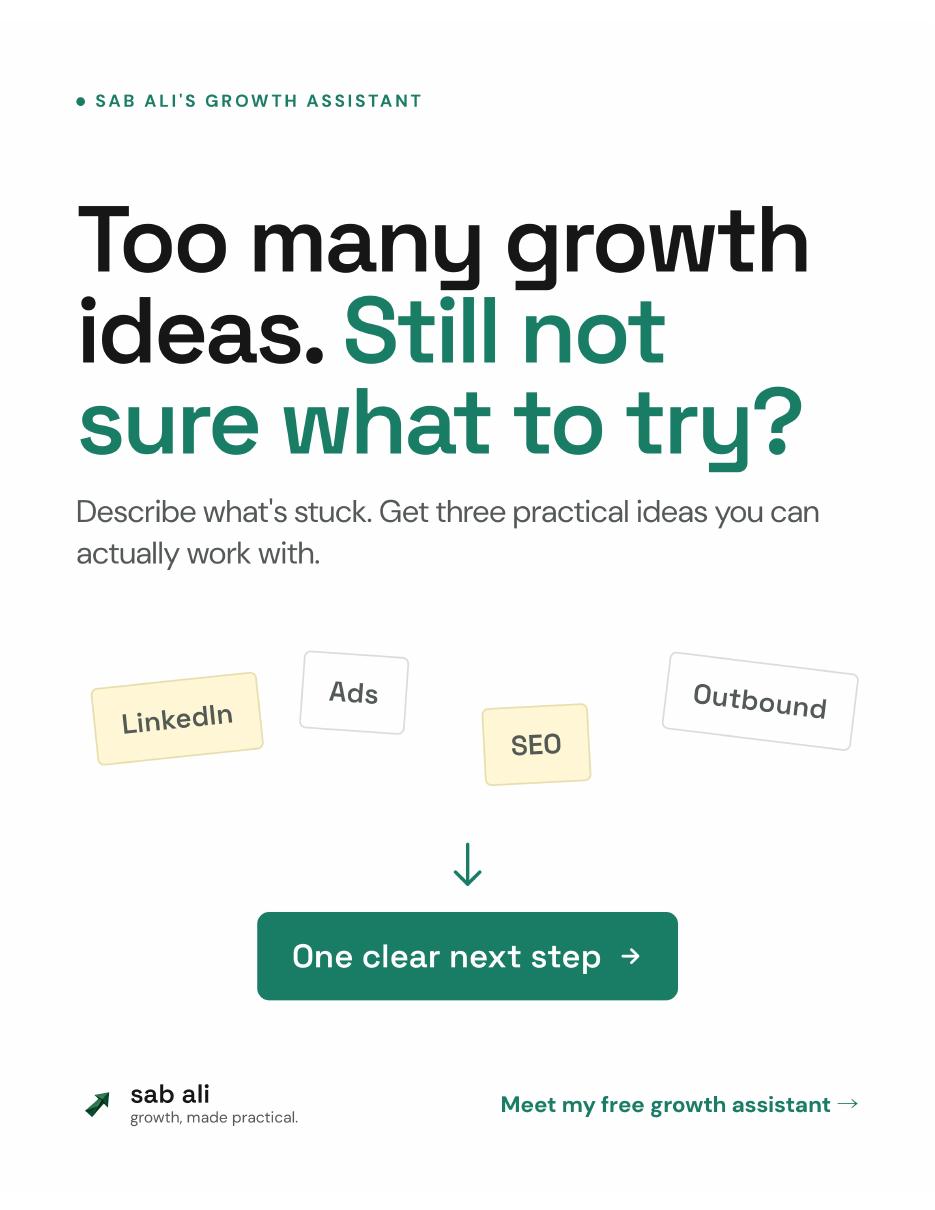
No idea where your
next customer is coming from?
Not sure how to get more sales, what to post, or why visitors don't buy?
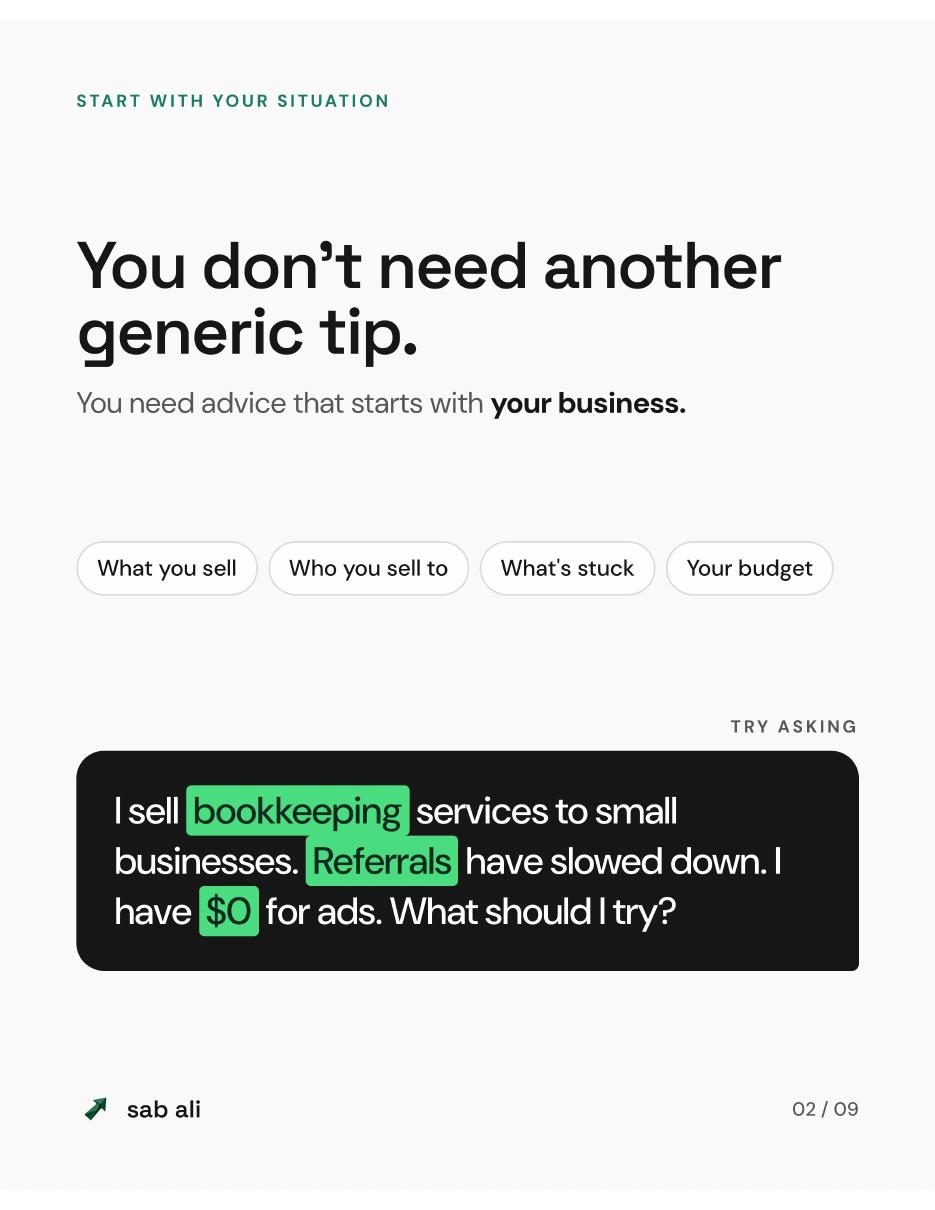
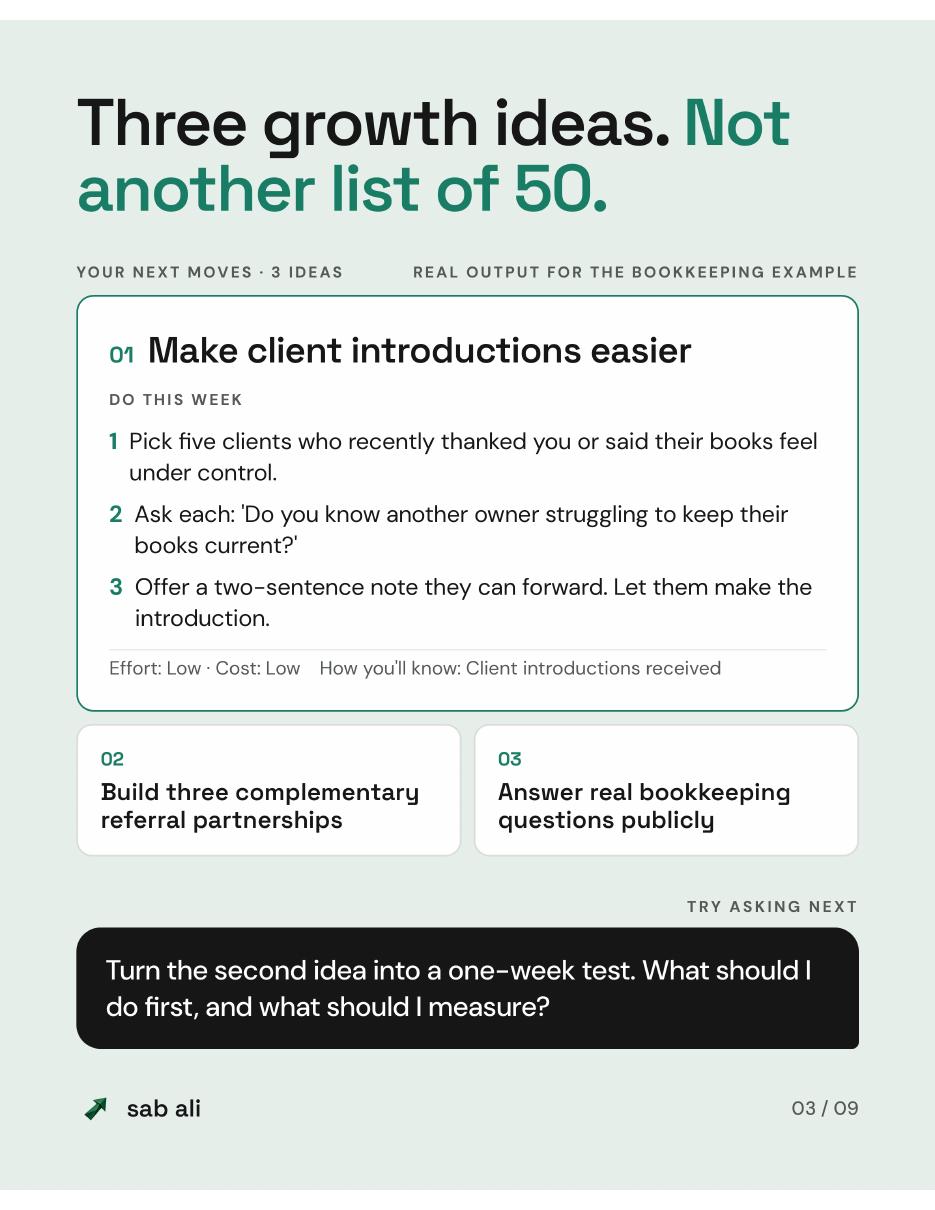
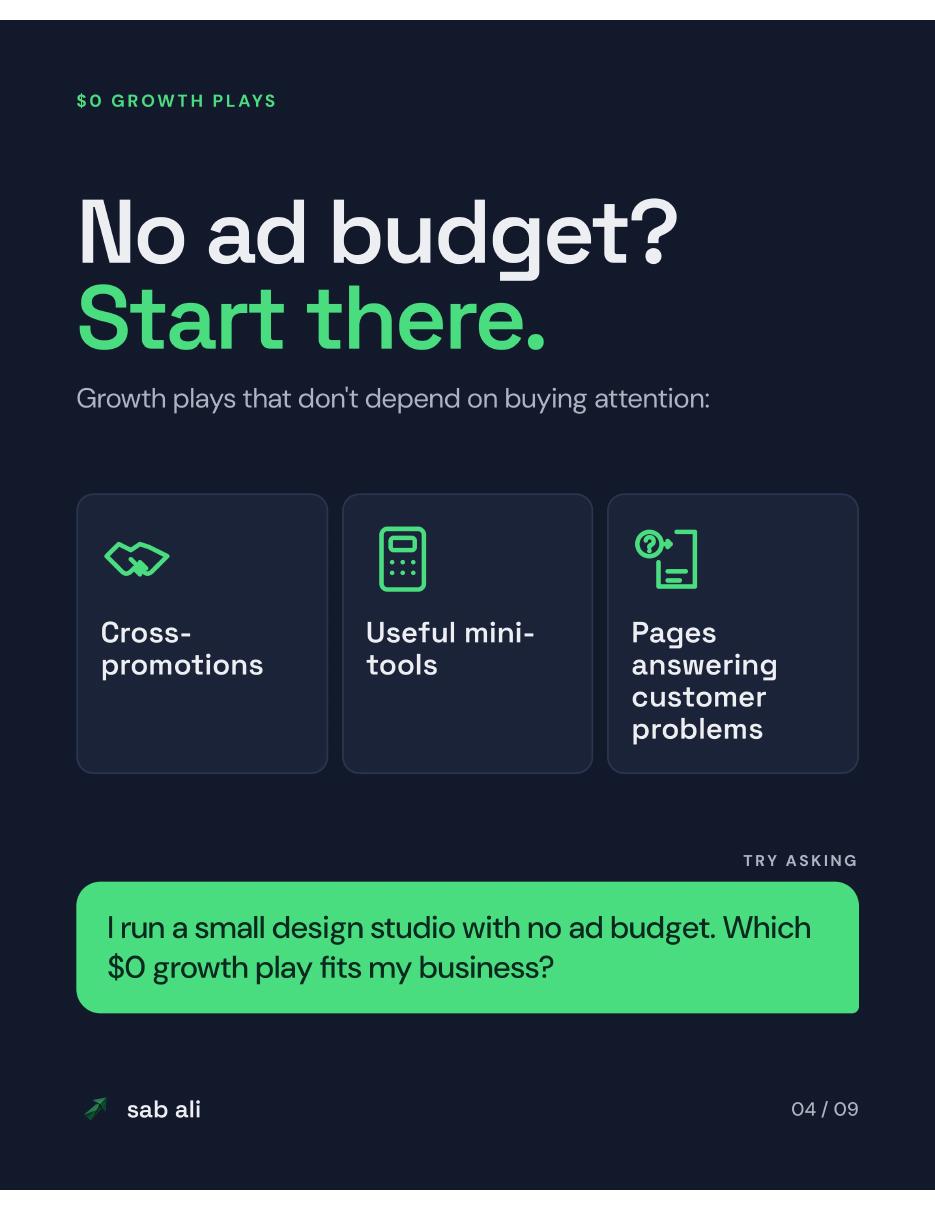
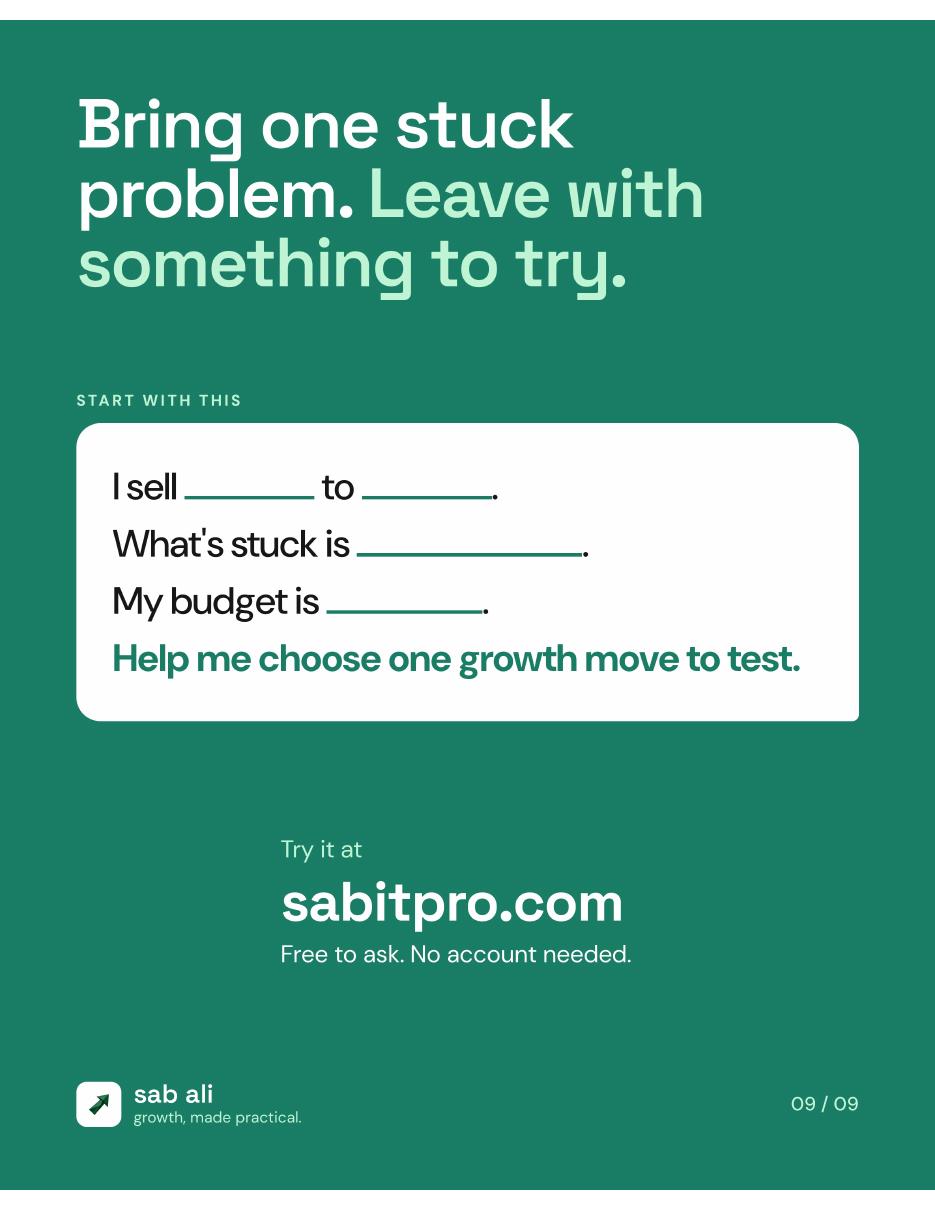
Tell the assistant what you sell & what's stuck. Get practical things to try, even with no ad budget.
Built from real startup work & a lot of studying. Free to ask, no account needed.
WHAT YOU'LL ACTUALLY GET
A quick tour, in nine slides.
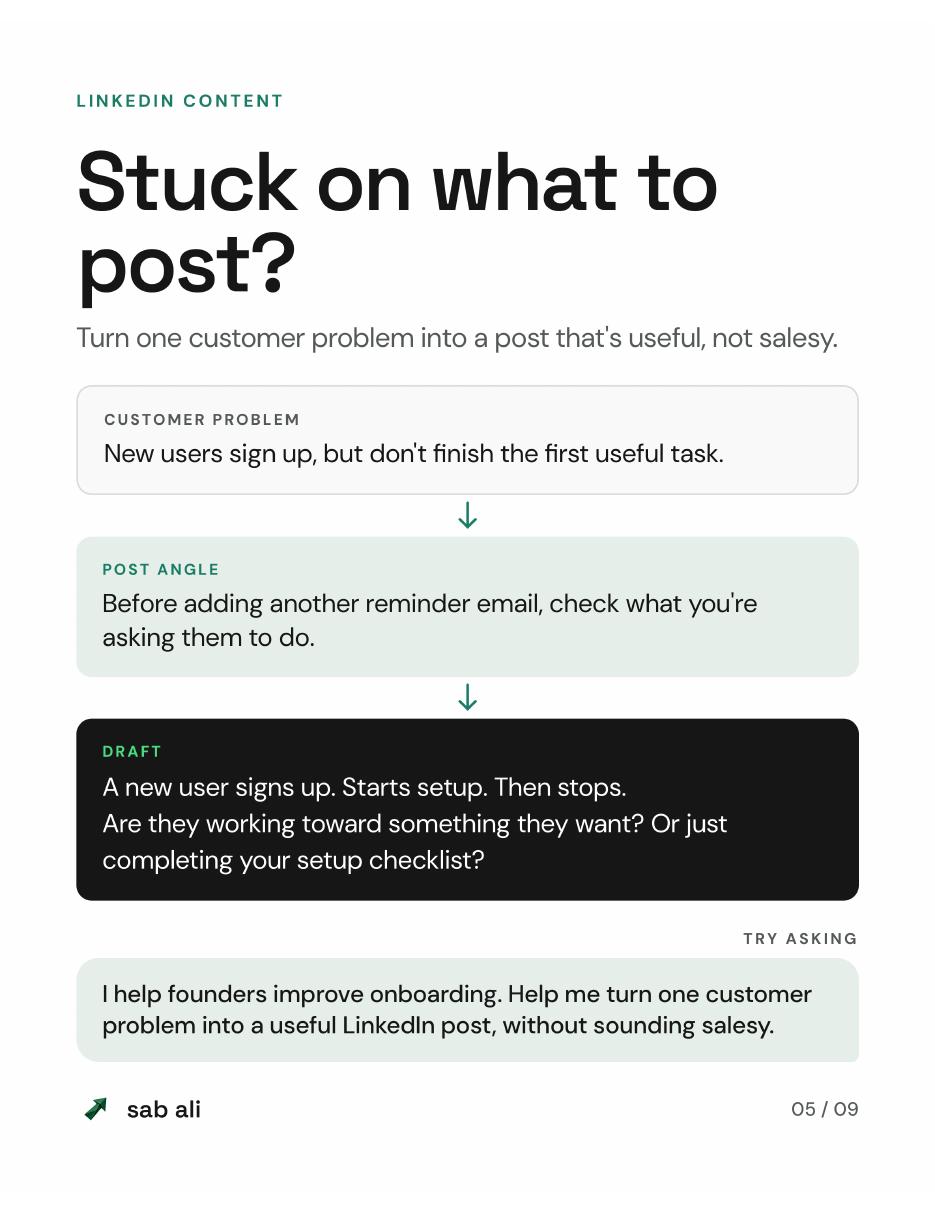
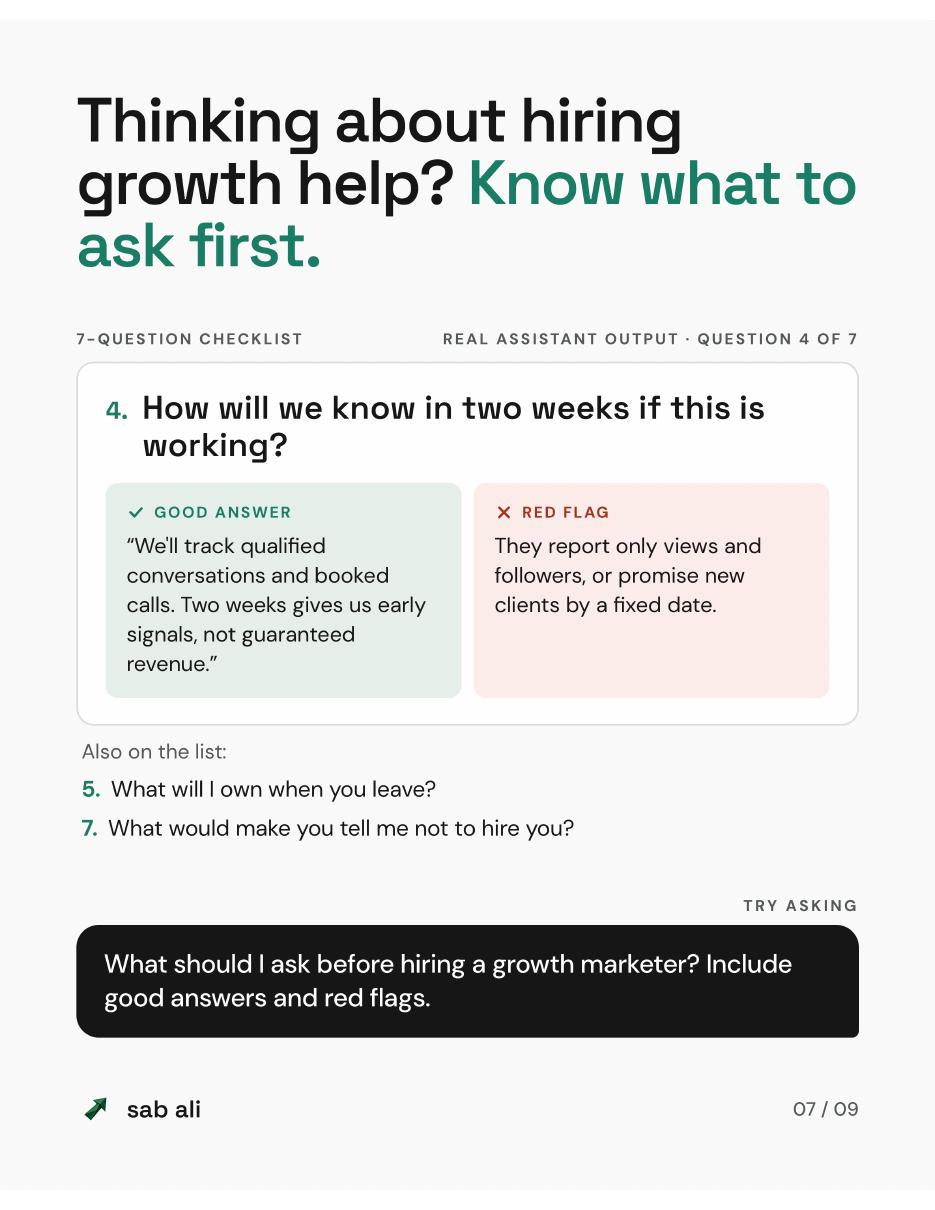
Built from startup experience & growth lessons from


 Lovable

“I plugged Sab's playbook into Claude Code via MCP and ran my product through it. Within the hour I had the two plays that actually fit where I am. One of them gave me an idea for a free tool I can ship. The templates are concrete enough to use the same day.”
WHO THIS IS FOR
This is for you if...
- 01
You have customers, but growth still depends on you doing everything.
- 02
Referrals are slowing down, and nothing has replaced them yet.
- 03
You've tried a bunch of tactics. None of them really stuck.
- 04
You're about to hire for growth and want them to start on proven ground.
- 05
You'd rather own a system than rent a campaign.
- 06
You want to see the reasoning, not just a report.
A TASTE OF SAB'S LIBRARY
Before more traffic, find the leak.
- 01
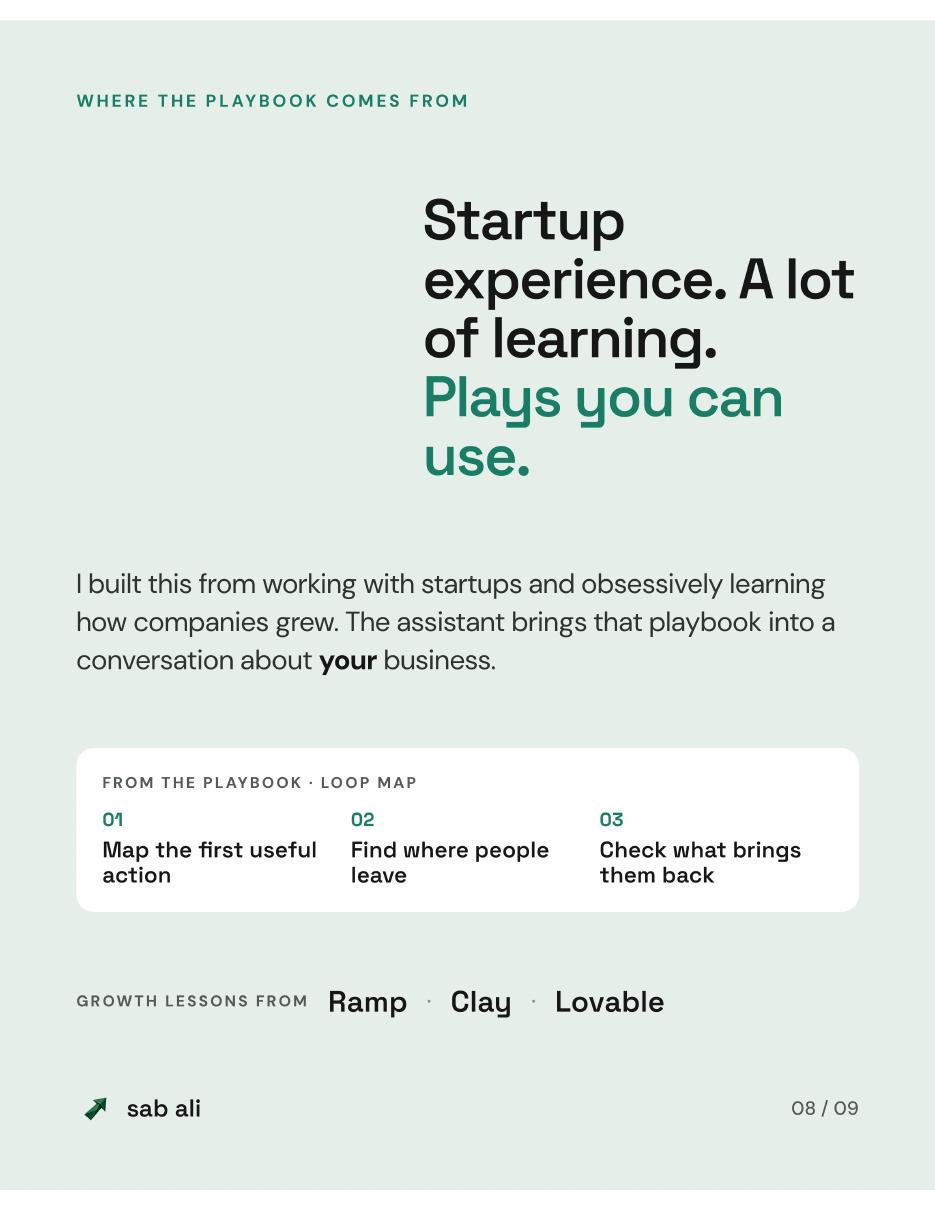
Map the first useful action
Where do people arrive? What do they do next? Write down the steps.
- 02
Find where people leave
Look for the step people drop at. Fix that before adding more traffic.
- 03
Check what brings them back
What does the action produce? Can others see it, and does it bring anyone back?
Not another list of “try everything”. Just a place to start.
HOW A MESSAGE GETS SHARPER
Every reply teaches you something.
- Try 01
What came back: Silence. It reads like every other pitch.
- Try 02
What came back: Some replies, and one objection: "We already have a tool."
- Try 03
What came back: People ask for the one-pager. The objection became the message.
HOW I WORK
The next-move loop. Five steps, then again.
- 01
Listen
Start with what buyers already say, not what we wish they said.
- 02
Pick
Choose one problem. Just one. The rest can wait their turn.
- 03
Try
Run a small test this week, cheap enough to be wrong.
- 04
Learn
Read every reply and number. Even the awkward ones.
- 05
Keep
Write down what worked so it repeats without you.
WHERE ARE YOU STUCK?
Each level asks one question.
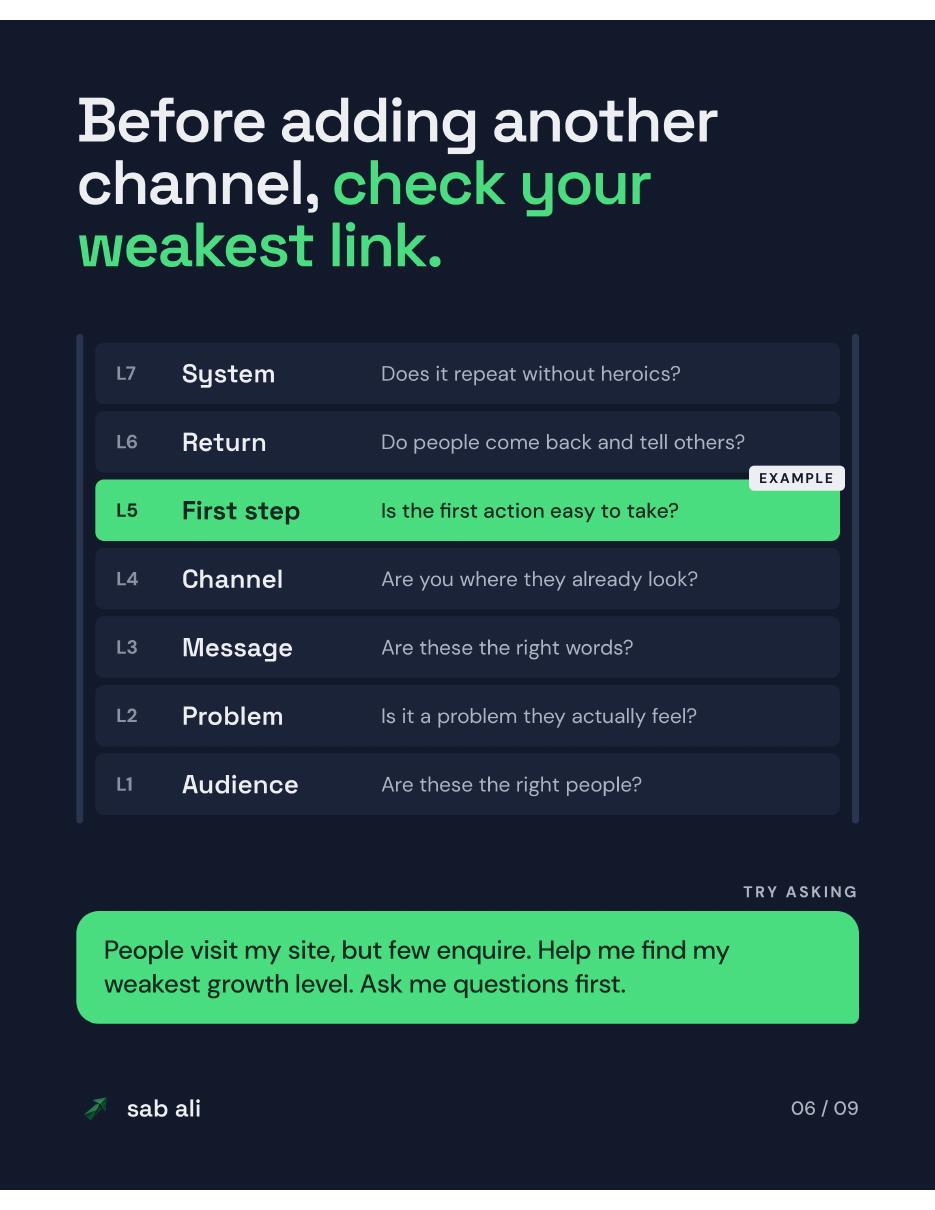
A weak answer low down caps every level above it. So fix the lowest weak one first, not the loudest.
- L7SystemDoes it repeat without heroics?
- L6ReturnDo people come back and tell others?
- L5First stepIs the first action easy to take?
- L4ChannelAre you where they already look?
- L3MessageAre these the right words?
- L2ProblemIs it a problem they actually feel?
- L1AudienceAre these the right people?

“Sabit shaped and launched the initial strategy for my online presence during a one-month, asynchronous sprint. His guidance gave me clear direction and momentum, and together we tripled my reach in that period.”
LET'S TALK ABOUT YOUR BUSINESS
What's getting in the way of more sales?
THE PERSON BEHIND THE PLAYBOOK
Built by someone who does the work.
I'm Sab Ali, a Toronto-based growth marketer, operator & builder. I've worked across 10+ startups, on growth campaigns, experiments and product launches.
This playbook isn't theory. It's that work - plus years of obsessively studying how companies like Ramp, Clay & Lovable actually grew - turned into plays you can run. The assistant uses it, not just a blank prompt.
It can help you think. But when you need someone to run the work with you, that's where I come in.
LIVE IN THE TERMINAL?
Use the playbook inside your own AI.
Your agents already know your business. Plug them into Sab's plays, run sheets & templates, and let them do the matching. Free, no login, read-only.
https://sabitpro.com/mcpclaude mcp add --transport http sab-growth-playbook https://sabitpro.com/mcpWorks with Claude, Cursor, ChatGPT and other MCP clients: add a custom connector and paste the URL. Even just one question is a fine start.